Motorboat Basics – Quick Guide for First-Time Captains
Driving a small motorboat is easy and fun, even more if you have never done it before!
This page covers the absolute basic things you need to know before heading out into the archipelago.
Before departure, we will also show you the boat and explain the controls.
1. Starting and operating the motor
Most small motorboats are very simple to operate.
Controls
The steering wheel controls direction, that’s just like driving a car
The throttle lever controls speed
Neutral position allows the engine to run without moving
Reverse is used for breaking/ slowing down and reversing. Never go from full speed forward to reverse.
Important
Always start and stop the engine in neutral
When motoring, always keep the “kill cord”/ “deadman’s cord” around your wrist
Open the airing cap on the gas tank. If you don't do that, a vacuum will be created in the tank and gas won't flow to the engine = engin will stop running.
The engines are seawater-cooled, so always check that water is running off the engine when motoring.
Move slowly in harbours, but if moving too slowly, you’ll start drifting. So adjust the speed to the conditions and surroundings.
Keep both hands available when manoeuvring
2. Boat Speed and Wake
Speed is one of the most important things to manage on the water.
Always slow down when:
entering or leaving harbours/moorings
passing close to other boats. Do not go too fast and too directly on their wake, adjust your speed. Do not pass their wake head-on but at an angle
near swimmers, kayaks or paddle boards
approaching docks or shorelines
Wake from your boat can disturb others or damage the shore and/or boats tied to docks.
In many areas, there are speed limits of 5 knots, especially in harbours and sheltered bays.
3. Basic Right-of-Way Rules
Boat traffic follows simple rules similar to driving.
Meeting another boat head-on
Both boats turn slightly to starboard (right) and pass each other.
Crossing paths
The boat coming from your right side has priority.
If another boat is coming on your right:
slow down
let them pass in front
Overtaking
The boat that overtakes must keep clear. In other words, if you are going faster than the boat in front of you, pass it on either side with a decent amount of space in between.
Always give way to
sailboats under sail
large ships and ferries
kayaks and swimmers
Even if you have the right of way, always avoid a collision.
4. Using the GPS for navigation —> Add something about SKIPPO APP here or in another frame
Your boat will have a GPS chart plotter that shows your position and surroundings (both under and above water). It shows your live position, just like Google Maps when driving a car.
Basic tips:
The boat icon shows where you are. It’s usually at the centre of the screen.
Colours have different meanings:
Land is yellow
Deep waters are white
Shallow waters (between 6 and 3 meters deep) are light blue
Very shallow waters (btw 3 and 0 meters deep) are dark blue
Numbers are most likely the depth (in meters)
Stay between the red and green markers when possible; they show the safe path
Keep away from cardinal markers (black and yellow buoys that indicate a near “danger”, aka underwater rocks)
The GPS is an awesome device, but always look outside the boat as well :)
Paper charts(sea maps) are great too. They are useful for planning your day as they give a better overview of the zone. Another good thing about them is that they don’t require electricity :)
In case of doubts, always slow down.
5. Trimming the Boat
The outboard motors can be tilted slightly up or down to improve performance. This is done by simply pushing a command/button up and down.
Trim down (engine closer to the boat) when:
accelerating
rough water
getting on plane
Trim up (engine slightly away from the boat) when:
cruising speed
reducing fuel consumption
Simple rule:
If the bow(front) lifts too much or the propeller loses grip, adjust trim slightly down.
6. Anchoring and harbour manoeuvres
Anchoring allows you to stop and enjoy a swim, lunch or explore an island.
In the archipelago, due to the lack of tides and currents, we can moor all the way to a rock/cliff with the anchor behind the boat, or on a beach with/without the anchor.
It’s ok to moor in shallow water as long as you come in slowly and tilt the engine up to keep the propeller away from the ground.
How to moor on a sandy beach(without any anchor) - Basic steps:
Check the chart/GPS and wind forecast. Find a beach sheltered from the wind and free from underwater rocks (“+” on the charts)
Approach the beach slowly (We recommend doing a test approach without dropping the anchor, this way you’ll know if it’s a good mooring, free from any rocks)
Start tilting the motor up so the propeller doesn’t touch the ground
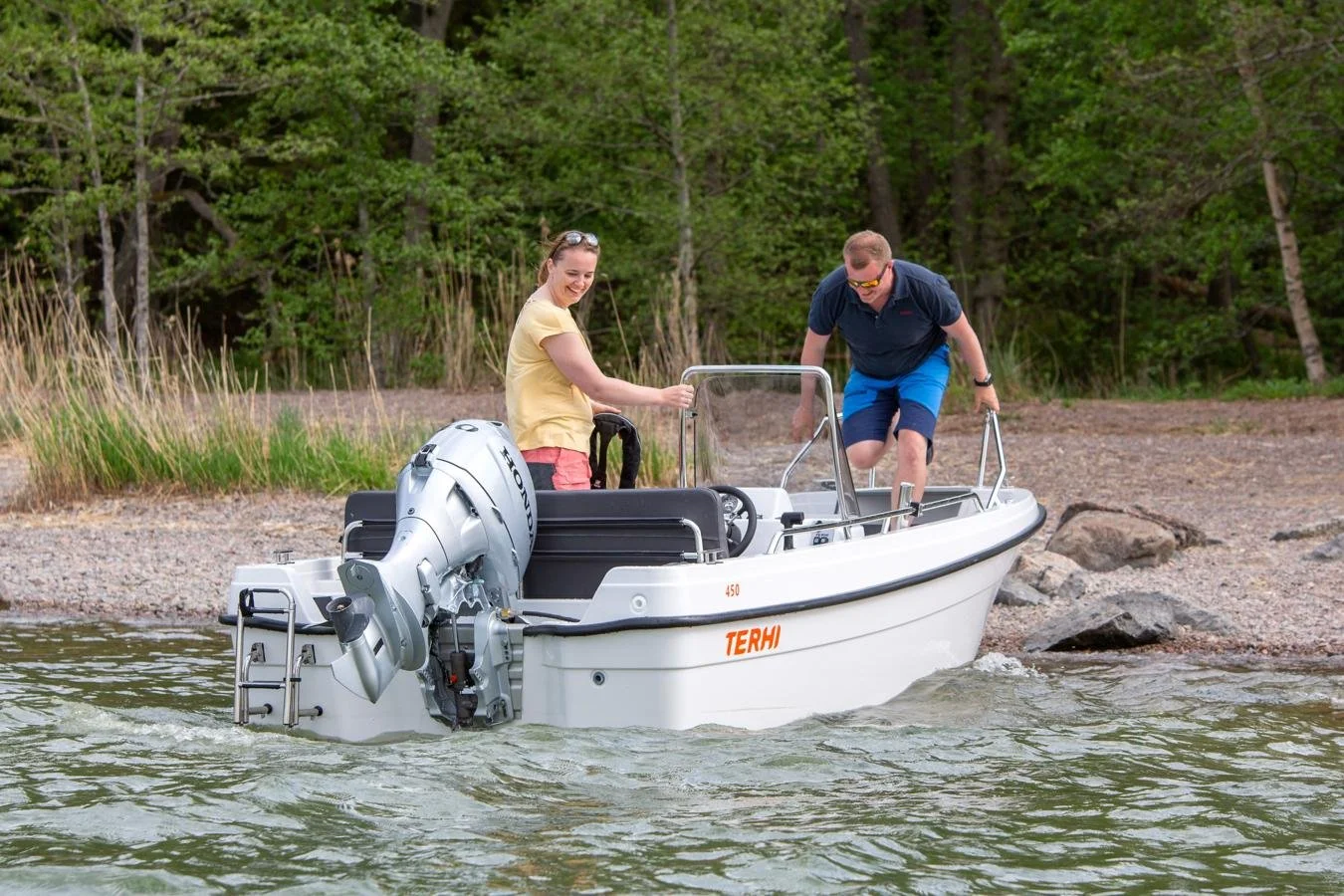
Keep moving slowly forward until someone can jump off the front of the boat onto the beach.
Turn the motor off and tilt it all the way up
Drag the boat higher on the beach so no wave/wake can drag it back
Set the throttle lever in Neutral so you don’t think the motor doesn’t want to start again (it can only start in Neutral position)
How to moor on a dock/rock/cliff (with the anchor) - Basic steps:
Check the chart/GPS and wind forecast. Find a mooring sheltered from the wind and free from underwater rocks (“+” on the charts)
Approach the spot slowly (We recommend doing a test approach without dropping the anchor, this way you’ll know if it’s a good mooring, free from any rocks)
Start tilting the motor up so the propeller doesn’t touch the seabed
Drop the anchor when the front of the boat is about 15 meters from the rock you’re aiming at
Keep moving forward until someone can jump on the rock off the front of the boat. Make sure the anchor line doesn’t get stuck in the propeller.
Turn the motor off
Secure the mooring lines using trees or the provided mooring/rock wages (bergkil) and hammer
Tilt the engine higher
Set the throttle lever in Neutral so you don’t think the motor doesn’t want to start again (can only start in Neutral position)
To leave the mooring, do the steps in reverse: Start the engine in Neutral, check your surroundings, remove the mooring lines (do not forget the wages and hammer), draw on the anchor line, tilt the engine down, retrieve the anchor, tidy the lines up, and you’re good to go.
7. Safety Basics
Before leaving the harbour or a mooring:
Everyone must wear a life jacket
Check fuel level
Start the GPS and wait until it finds your position
Make sure the anchor and ropes are onboard
Always bring:
phone with fully charged battery
water
sun protection
Clothing adapted to the weather (weather can change quickly at sea and is often colder than on land)
If you need help on the water, the Swedish Sea Rescue Society (Sjöräddningssällskapet) can assist.
8. Assistance at sea
The Swedish Sea Rescue Society Sjöräddningssällskapet has a rescue station in Nynäshamn.
If you experience problems at sea, such as engine trouble, running low on gas or running aground, they will come and assist you.
Nynäshamn's Sjöräddningssällskapet direct number: +46734414479(good idea to save it in your phone)
Membership with Sjöräddningssällskapet is personal and covers everyone living in the same household.
If you'd like to become a member, sign up now here.
If you are not a member, they will still help you if needed, but the assistance may be charged or they'll offer you to sign up live (yearly membership costs 850 sek)
Emergency (danger to life), call 112
9. A few useful knots when using a motorboat
You don’t need to be an expert in knots to enjoy your day at sea, but knowing a few basics will make docking, anchoring and cliff mooring much easier and safer.
A good thing to keep in mind is: a “good” knot should fulfil a function (hold the boat parked, a line to an anchor…) and should be easy to undo when you’re done using it.
Here are three simple and useful knots we recommend:
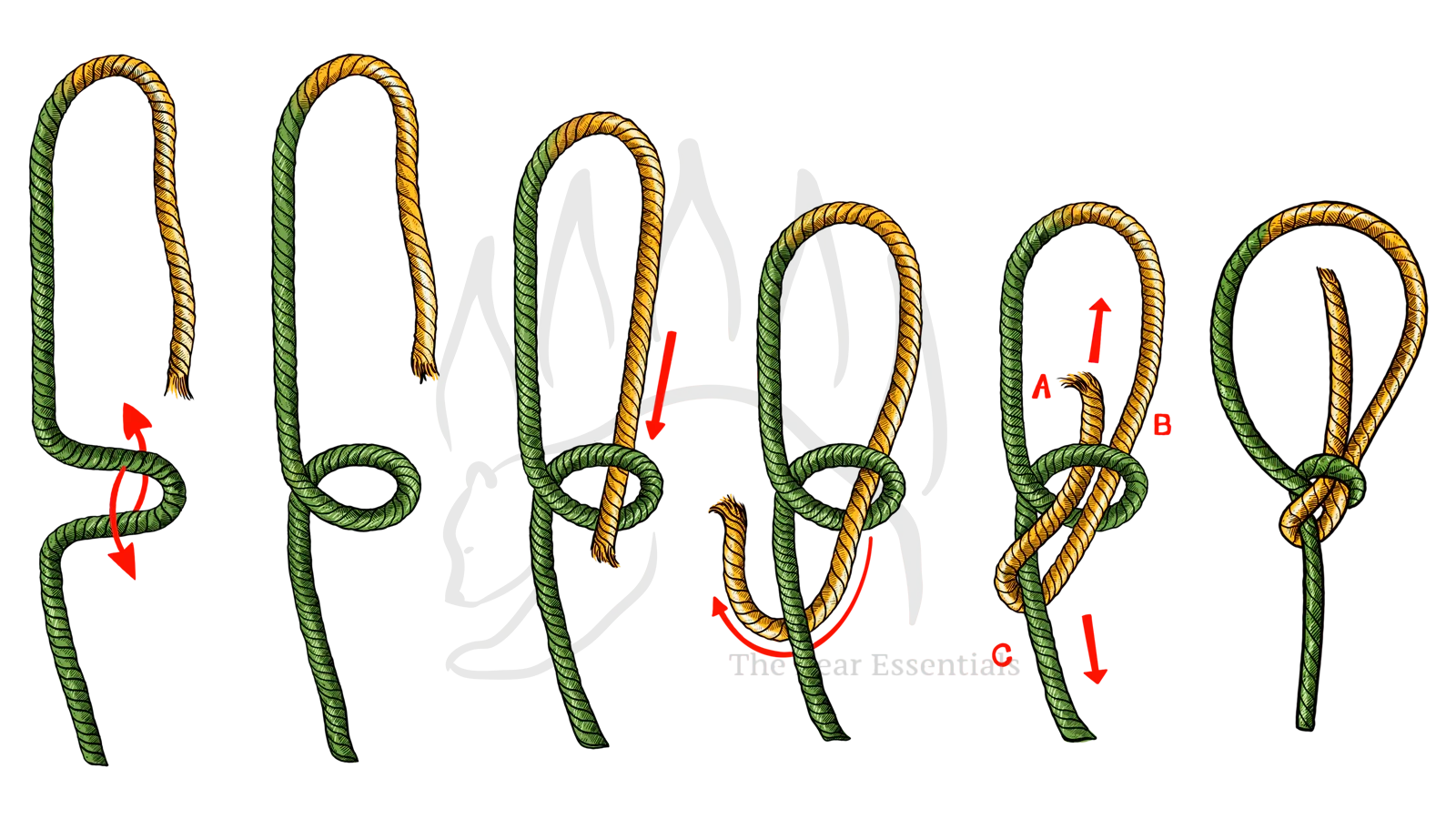
The bowline (Allround knot)
Creates a fixed loop that does not tighten under load.
Very useful for attaching a line to a ring, rock or anchor point.
See picture 1 below.
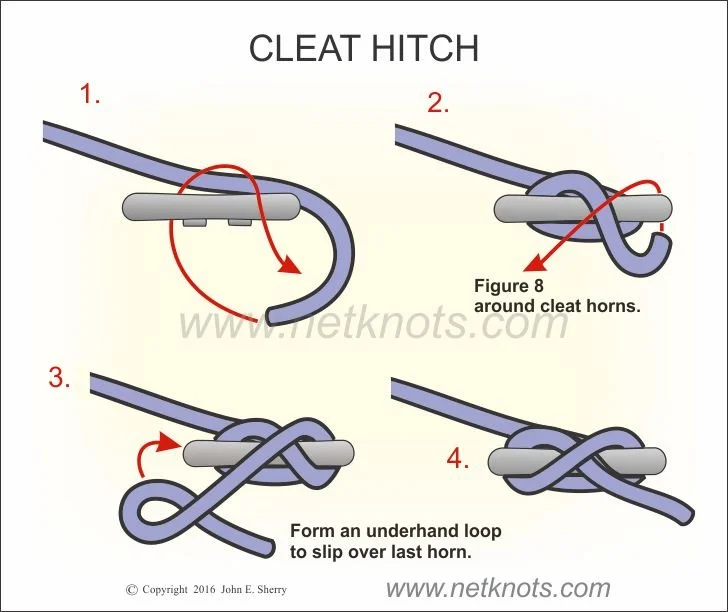
Cleat Hitch (Docking knot)
The standard knot for securing a boat to a dock or when mooring.
Quick to tie and easy to release.
See picture 2 below.
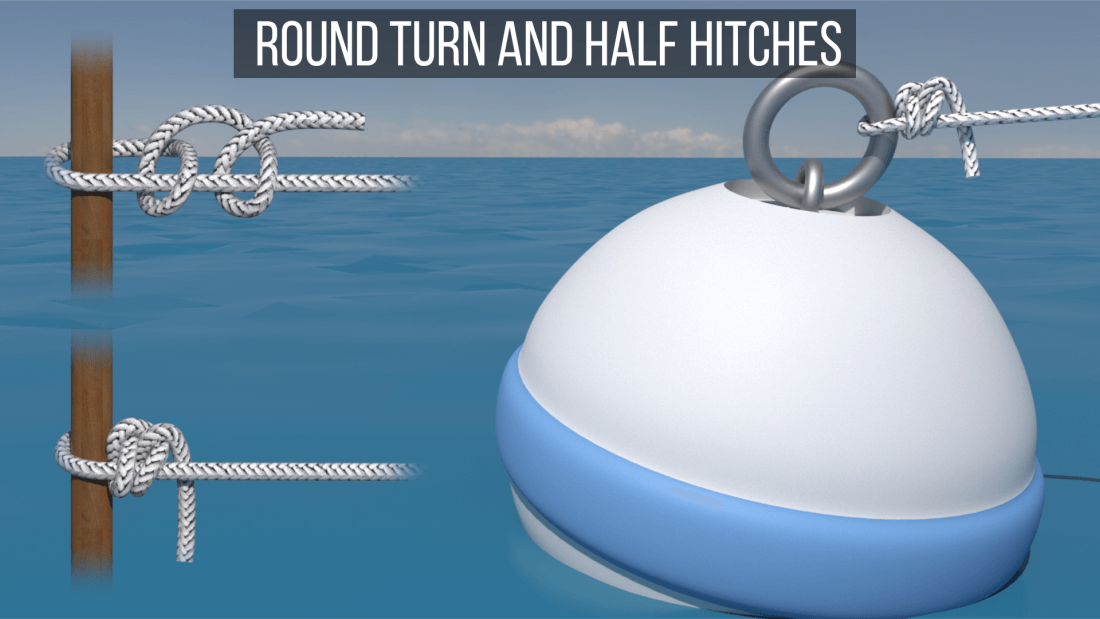
Round Turn and Two Half Hitches (Mooring knot)
A reliable knot for securing a line around a post, tree or rock.
Great when mooring in the archipelago.
See picture 3 below.